
The saddles that came with my bikes and plus other saddles I’ve bought for them.
MIXED Pack Light 5D
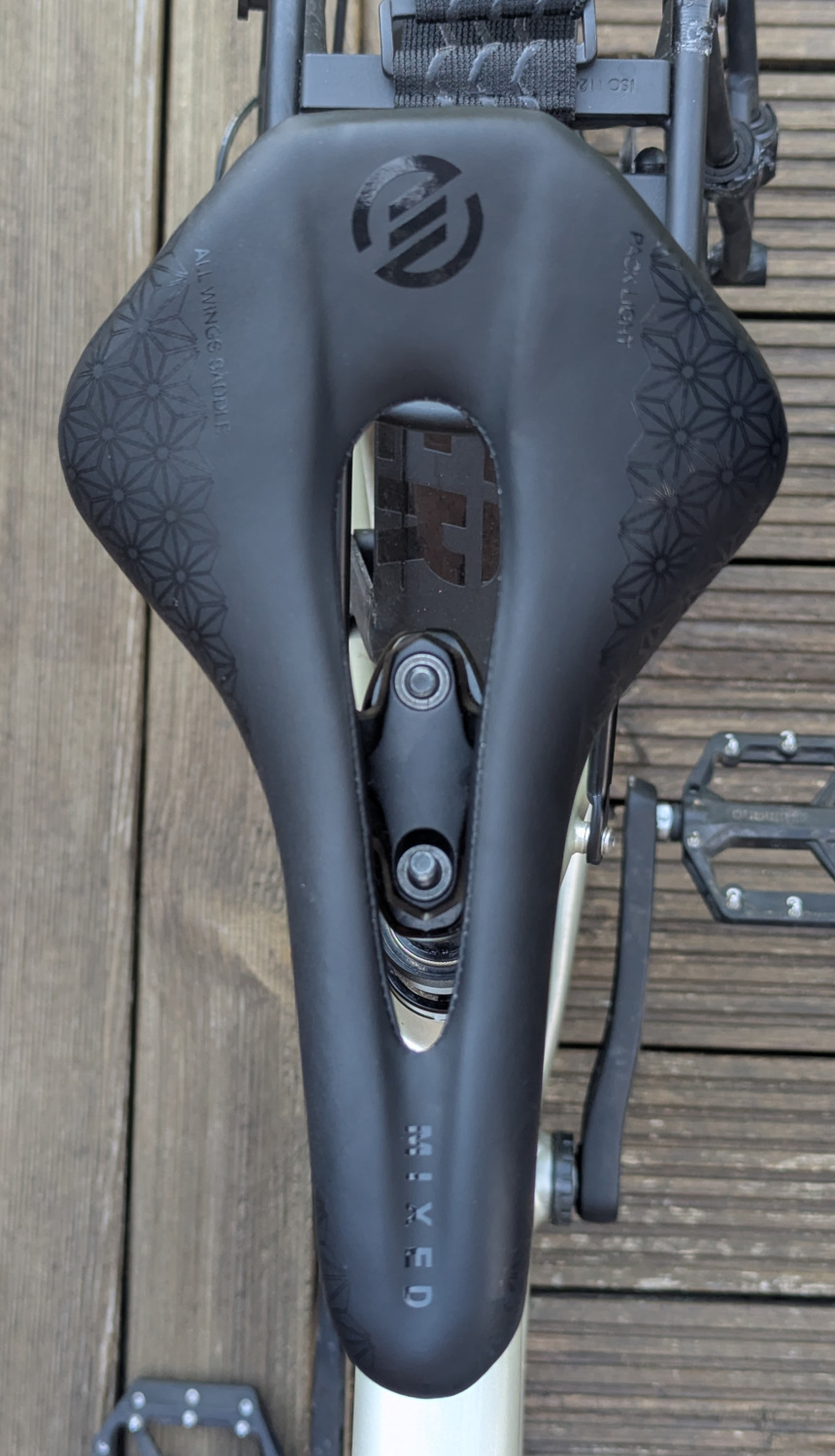
A short-nosed saddle with a wave profile. It is 143mm wide and has a pressure relief cut-out. It has a carbon shell (T700) and carbon rails with a PU (“microfibre leather”) cover over EVA padding. It’s the lightest out of the saddles I have.
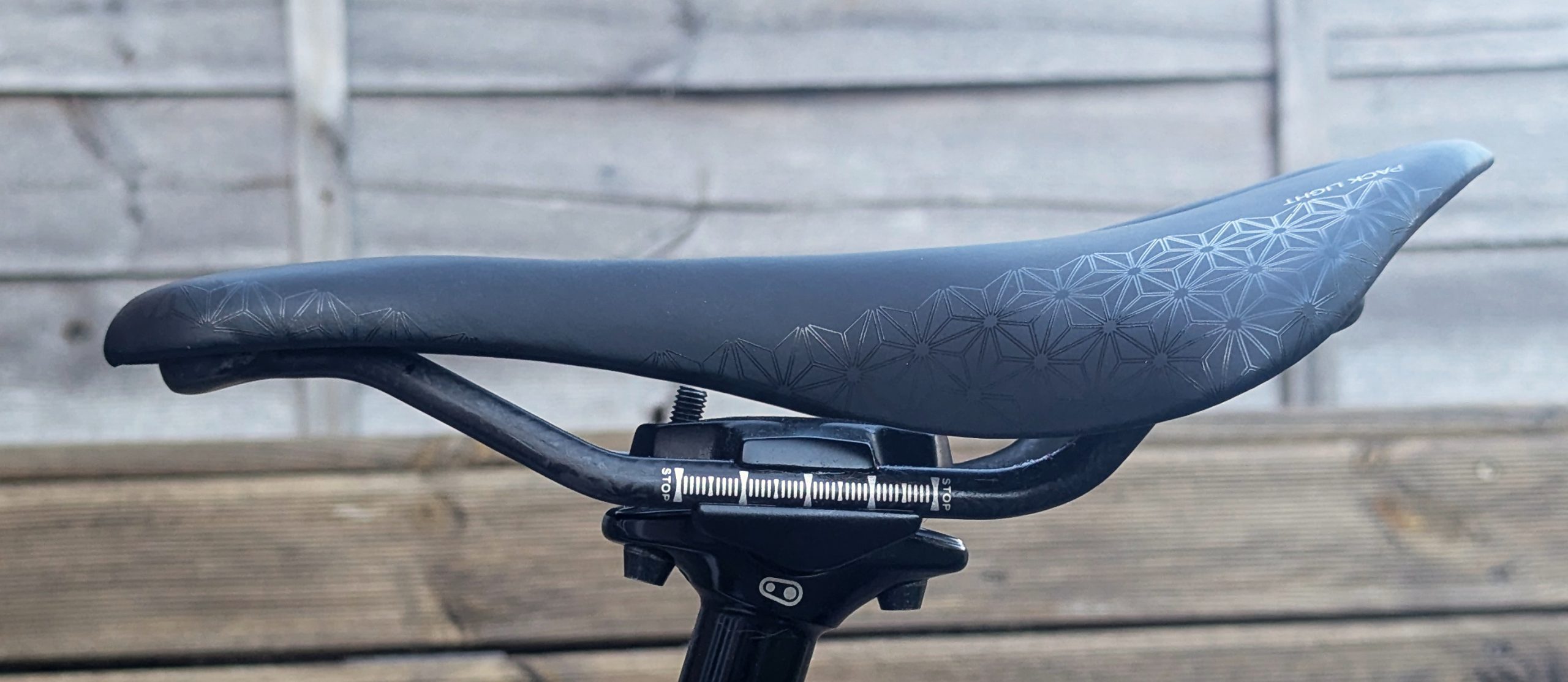
Having tried a few saddles I found that none of the Ryet Ultimate, Selle Italia X3 Boost nor PRO Griffon quite worked for me. But I’d found the old Pinnacle’s saddle seemed to be comfortable on long rides despite the lack of pressure relief channel – that lead to me wondering if my anatomy is more suited to one with a “wave” side profile saddle compared to a “flat” one. One wave-profile AliExpress saddle recommended by a YouTube bike fitter is the MIXED 5D – one he recommended in the same video as the Ryet Ultimate – with the Mixed 5D suggested as an option for those with narrow “sit bones” and he had noted that it has a more significant rise (i.e. wave profile) than the Ryet saddles.
It felt a bit odd to sit on at first – I can actively feel that rise at the back (whereas I don’t notice it on the Verse Comp saddle nor the Pinnacle’s saddle). However on my first few longer rides it seemed to be more comfortable than the various flat profile saddles and I stopped noticing the rise so much. I’ve done a 40 mile ride on it with only a couple of short breaks and wasn’t feeling uncomfortable in the saddle at all. I was wearing padding shorts for that ride though and with non-padded shorts or jogging bottoms it is a little on the firm side. I have this saddle fitted to my Cannondale Topstone 0 most of the year but switch to the Bontrager Verse Comp for winter when I’m likely to be wearing non-padded bottoms.
Bontrager Verse Comp
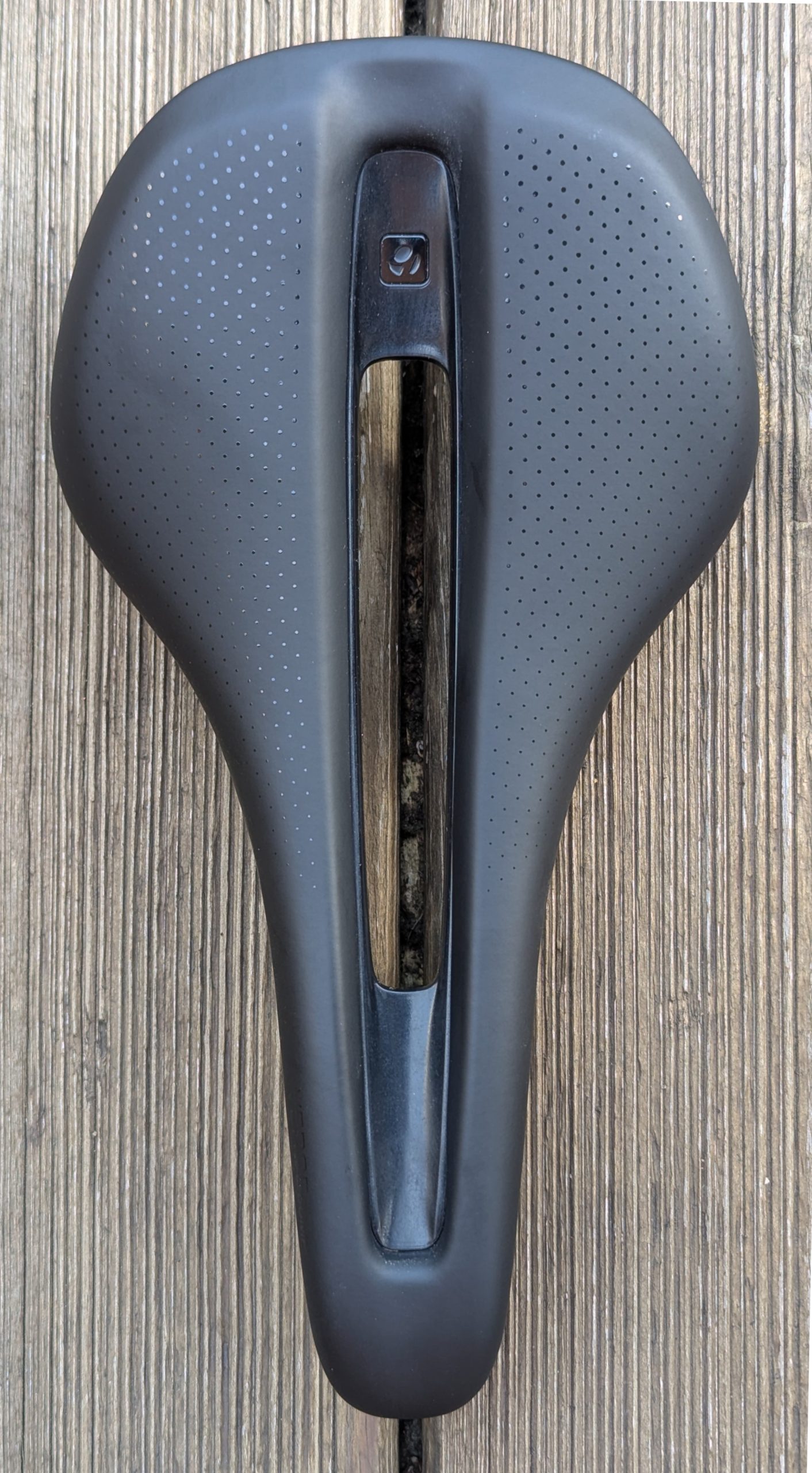
A long-nosed saddle with a wave profile (Bontrager also make a short-nosed version). It has a full length pressure relief cut-out and I have the 145mm wide version. The shell is plastic with an F-24 “soft touch” covering over foam padding and it has chromoly rails (notably long rails to give a lot of range for set-back adjustment).
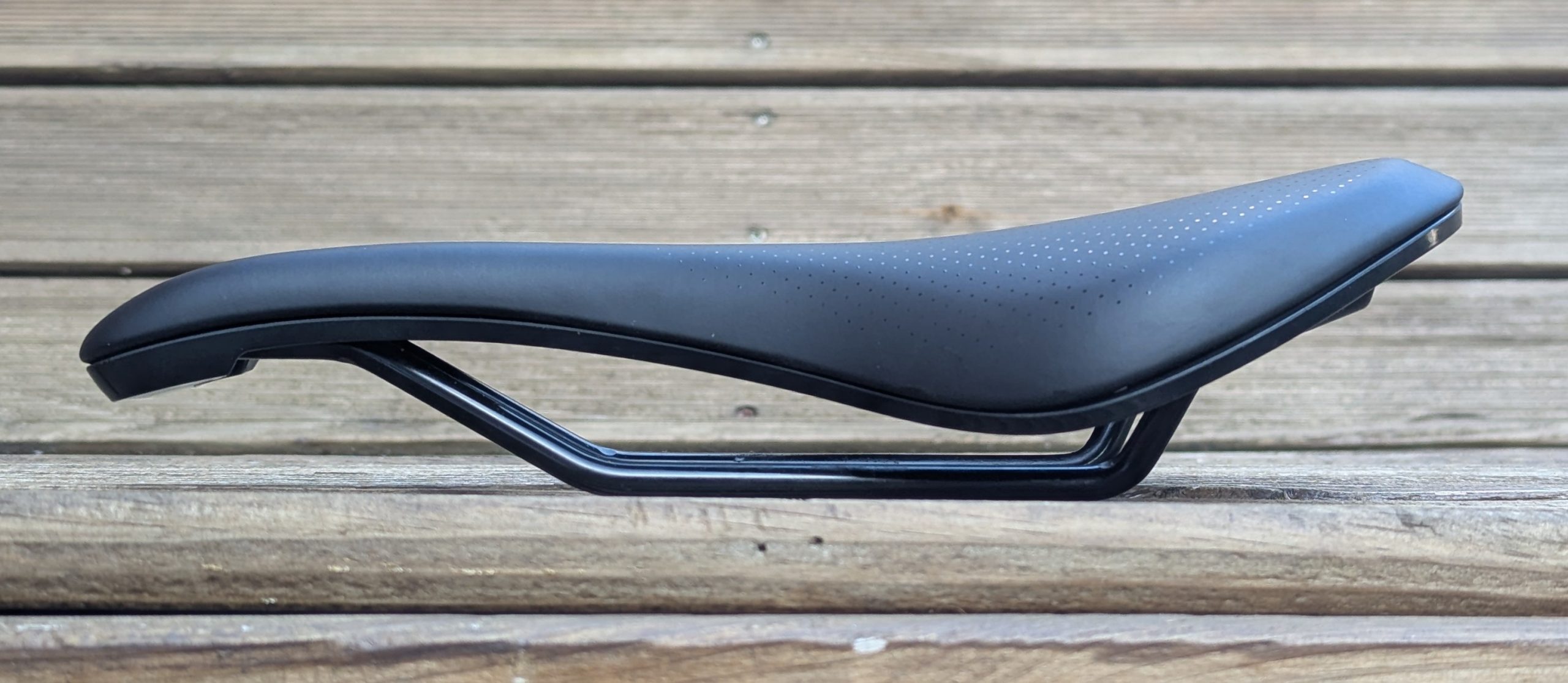
The used 2021 Trek Domane AL 2 I bought came with one of these saddles, although it was an older version than pictuered here and had a rip in the rear of the cover (which I have glued with a PU adhesive). When I first started riding the Trek the saddle didn’t feel entirely comfortable however after some adjustment and a few rides I improved the position and got used to the saddle shape and have actually found I get on with it quite well – no sense of excessive pressure points on e.g. 15+ mile rides. The kick-up at the back is less pronounced than on the MIXED 5D so I find it allows me to move on the saddle a little more than the 5D and it also has a little more padding so is a bit more forgiving if I don’t wear padded shorts.
I decided to look for another used one in excellent condition to try on my Cannondale Topstone over winter (when I will likely not be wearing padded shorts and so may find the Mixed 5D a little too firm) – I found one that was barely used (which is the one in these photos). There are some small design differences between the older and the newer version – the older version has small hex bolts holding the bottom of the shell on to a frame to clamp the cover, the newer version is just bonded (I assume to make the newer version cheaper to manufacture), and there are also some minor differences in the style of the central cutout (although the shape is the same) which I think are also down to this change in how the cover is attached. I have the older one of these on my Trek Domane AL 2 and will alternate between the newer one of these and the Mixed 5D on my Cannondale Topstone 0.
PRO Griffon CrMo (142mm)
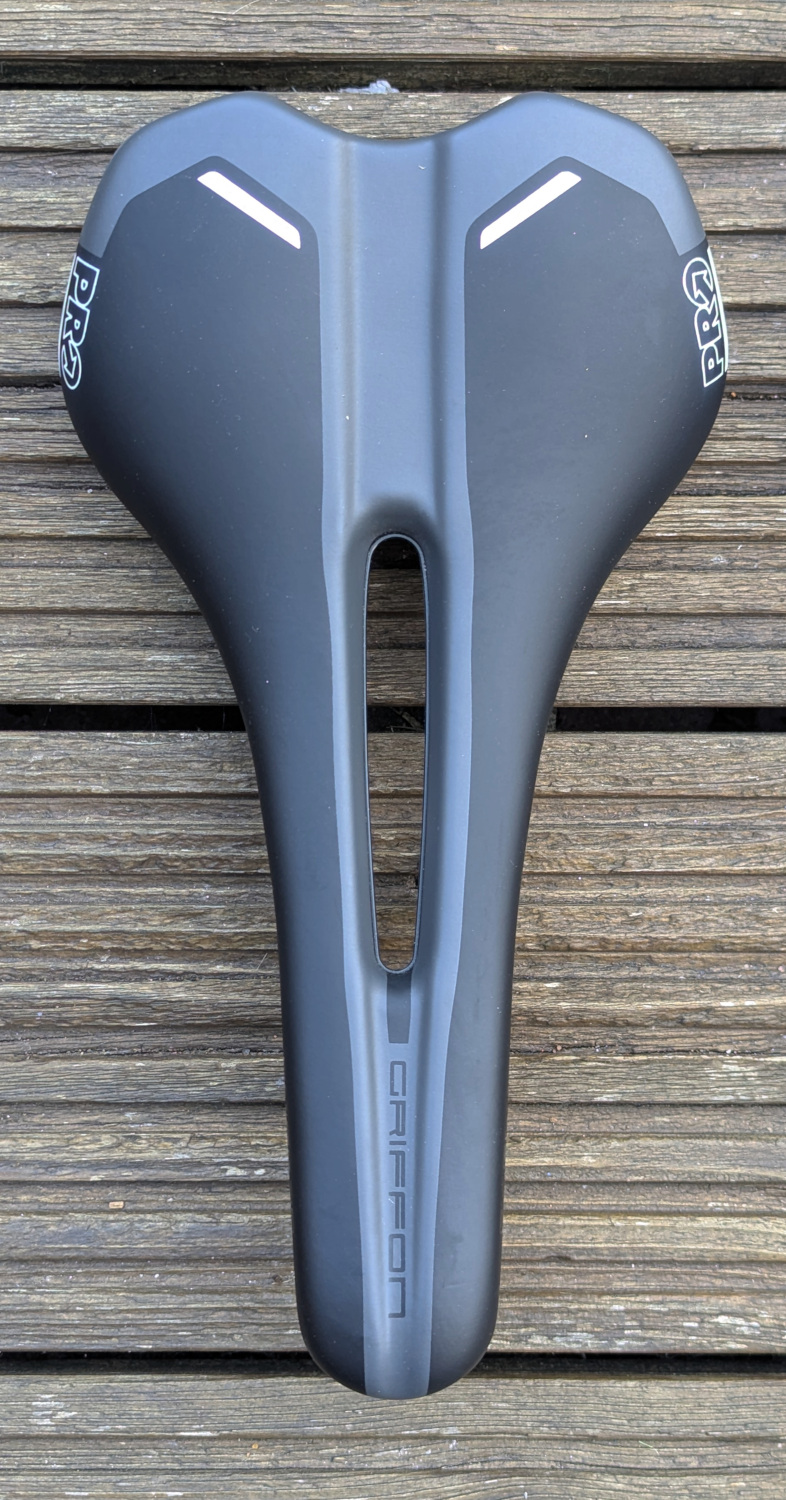
A saddle with a flat side profile, normal nose-length, rounded back and a pressure-relief cut-out. It’s 142mm wide and has a PU covering with EVA padding and cromoly rails. PRO also make a gel version (fibre-reinforced base, stainless rails and gel inserts in the padding) and a performance version (carbon base, stainless rails). Although still being described by PRO has having a flat side profile the CrMo version seems to have this sag in the middle which the other versions don’t have.
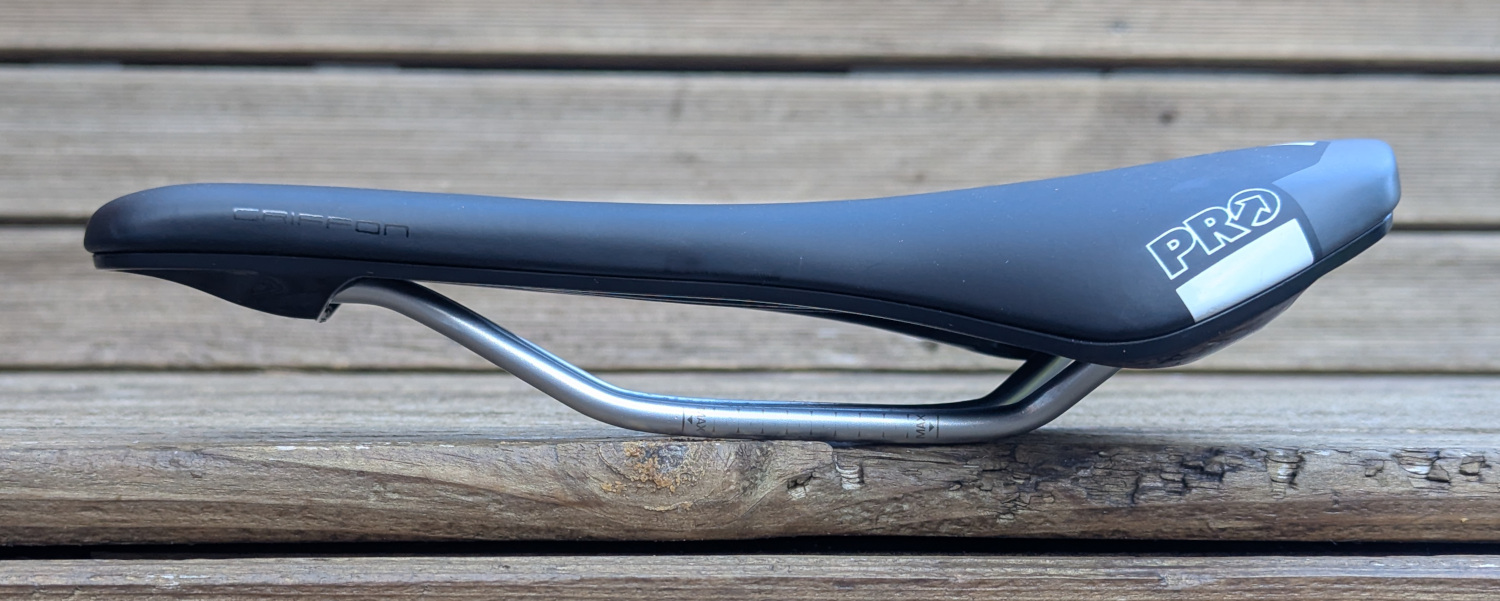
Once I started doing longer rides on my 1996 Marin MTB (after my return to cycling but before I acquired any other bikes) I found its original “Marin Comfort” saddle was uncomfortable to sit on for long. Having seen a few bike fitting videos on Youtube I decided to try a PRO Griffon. It claims to be designed for riders with less flexibility and who move around a lot. As mentioned despite being described as having a flat side profile it does dip in the middle, plus it has plenty of flex in the base so it curves even more when sitting on it. That flex in the base also does help cushion a little with rougher surfaces and I certainly found it better than the Marin Comfort saddle on longer rides, also preferring it over the Ryet Ultimate and Selle Italia X3 Boost mentioned below, but it does still feel like I’m feeling concentrated pressure points on longer sustained rides (i.e. rides with fewer junctions breaking them up). I currently have this saddle on my ’90s Marin MTB as it’s ok for the type of riding I do on that.
Ryet Ultimate (Carbon, 3d-printed)
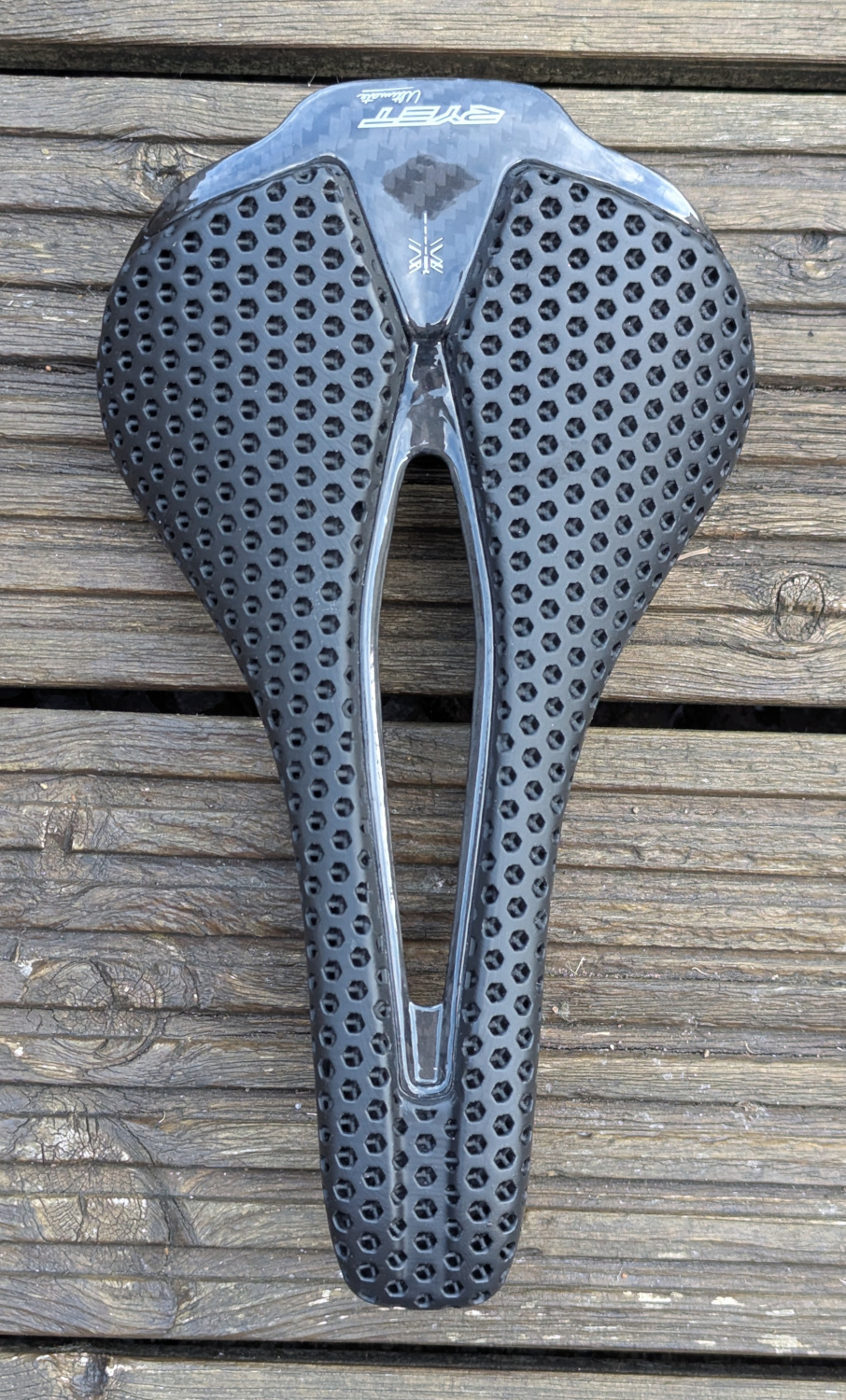
A short-nosed saddle with a flat profile. It is 140mm wide and has a pressure relief cut-out. It has a carbon shell, carbon rails and a 3d-printed TPU covering (claiming to have “differentiated cushioning zones” in that covering).
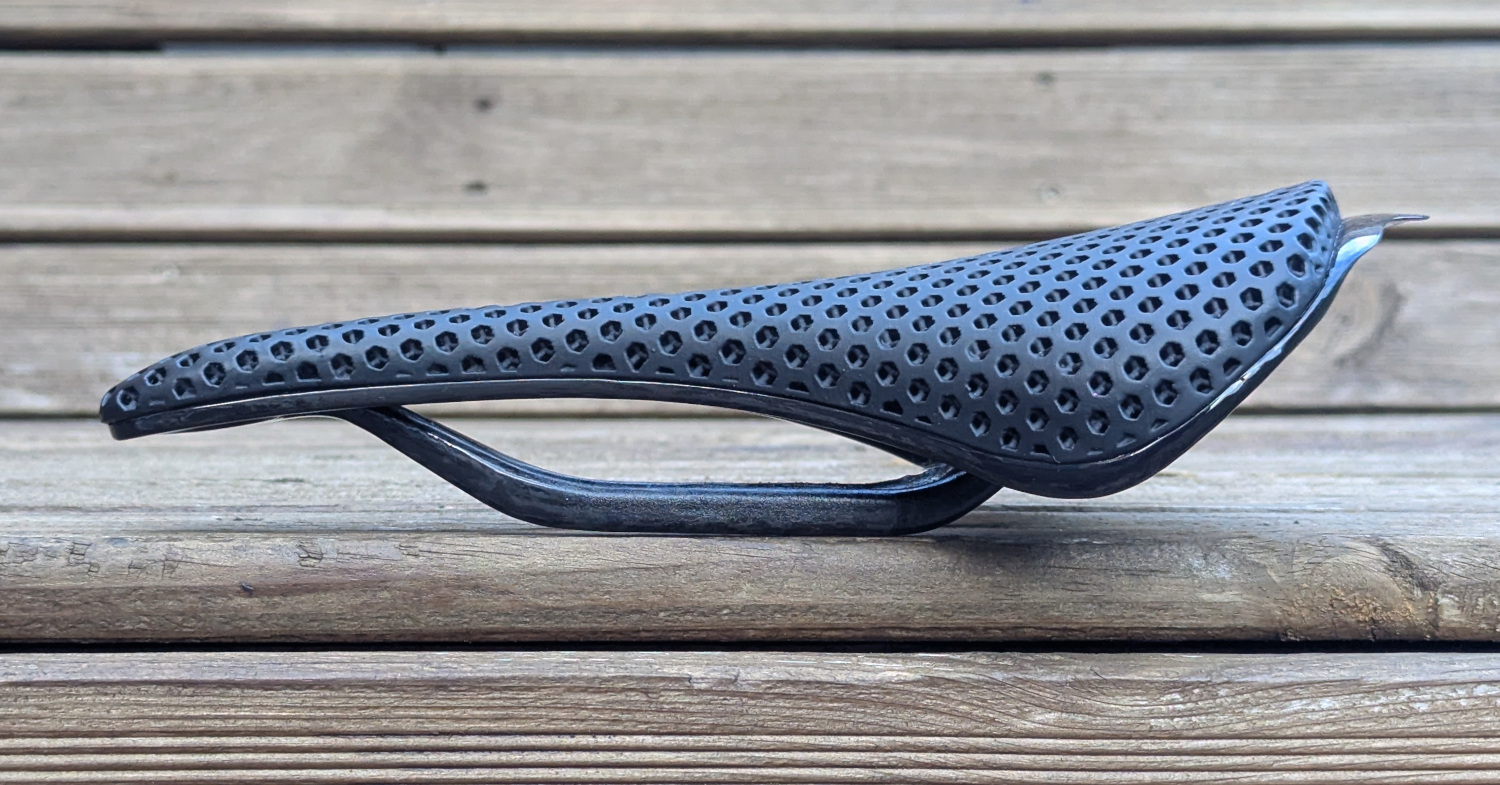
As I wasn’t finding the Selle Italia X3 Boost to my tastes on the gravel bike and having watched a few videos from bike fitters on YouTube about saddles I took a punt on a Ryet Ultimate Carbon Fibre 3d-printed saddle via AliExpress (which is the narrower of two Ryet saddles one bike fitter on Youtube said worked really well for many of his clients). There seem to be a couple of different shapes of saddle that Ryet have term the Ultimate – I think the one I got is an older 2024 variant. They do an option of a plastic or carbon shell, a couple of different rail options and then either PVA or 3d-printed TPU covering – I went for the carbon+3d printed variant. I’ve not found it suits me though. Initially I did have it set a little too high which caused discomfort on my sit bones after only 5 miles of sustained pedaling and it wasn’t as bad when lowered a little but still not great. I did try tweaking angle, setback and wearing padded MTB shorts but for rides with stretches of continuous seated pedaling (i.e. not broken by junctions) I just can’t get find a setting where it feels comfortable. Clearly it suits some people well but I suspect the shape of flat side-profile saddles just don’t suit my pelvis.
2015 Pinnacle Neon (Velo VL-1205)
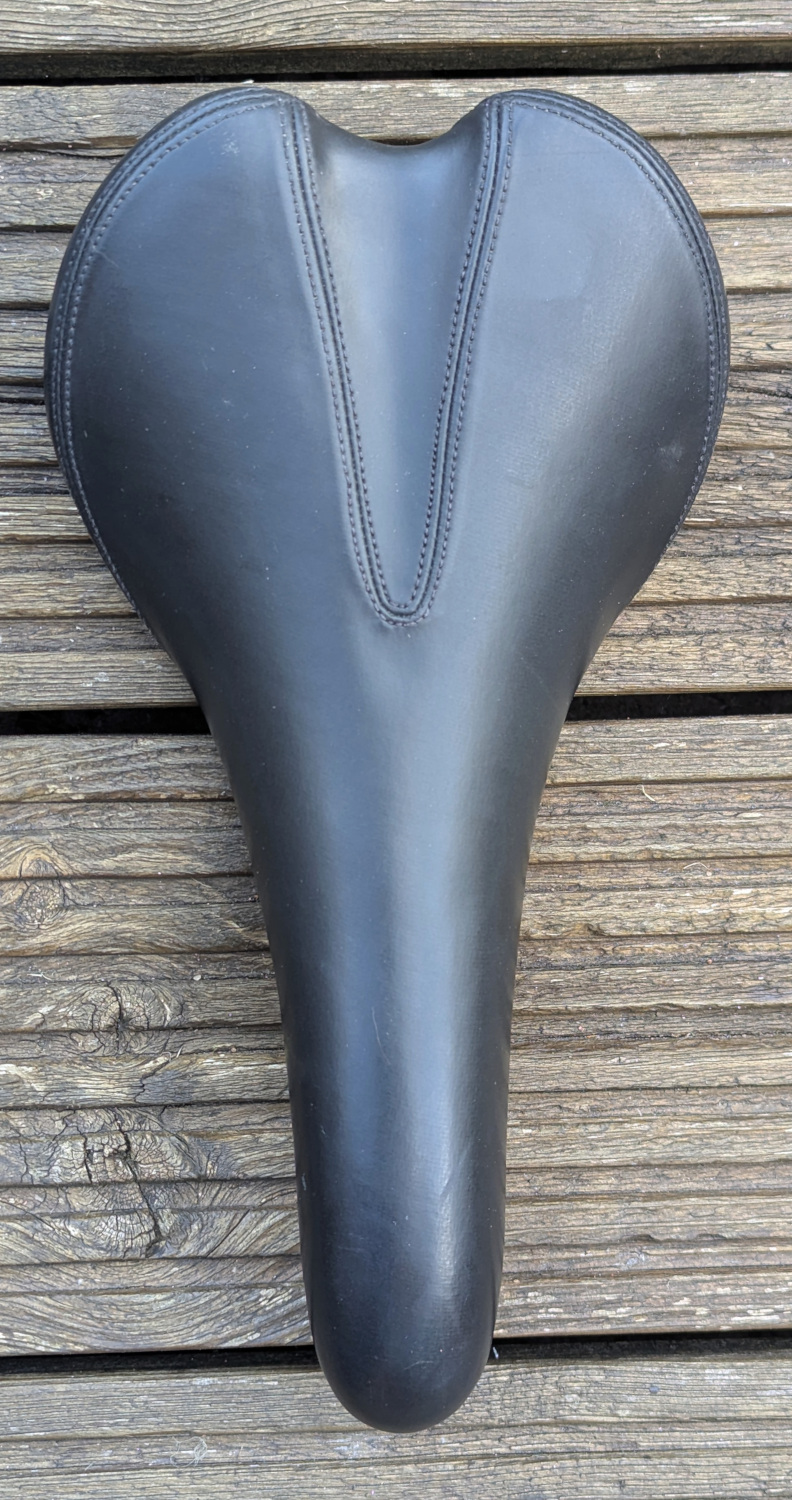
A saddle with a wave profile, normal nose-length and no pressure relief channel. It’s 145mm wide and the covering is likely PU. It was produced for Evans Cycles by Velo.
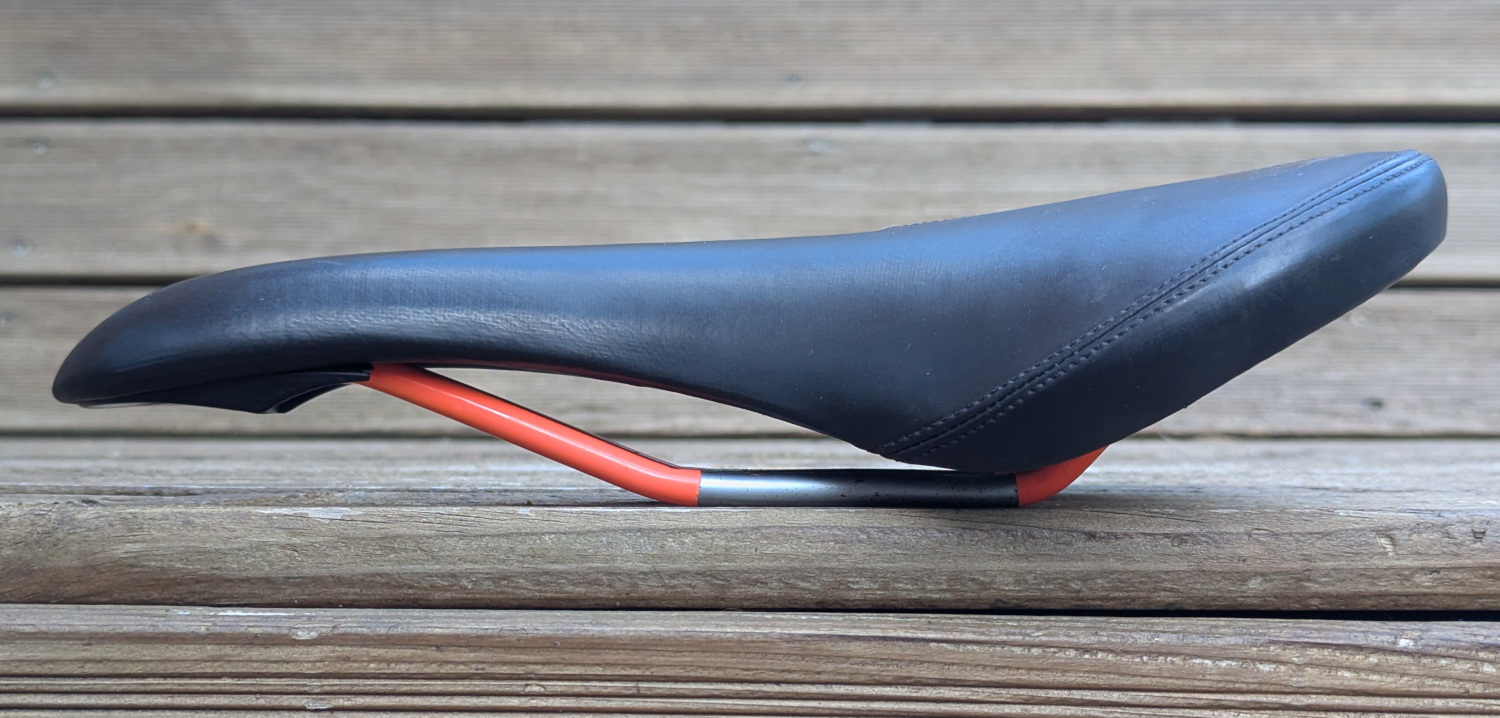
My 2015 Pinnacle Neon Two hybrid came with its original saddle. I’ve actually found it to be a saddle which suits me well – once I got the height set correctly I found it to be comfortable on long rides on that bike (and I’ve tried it on the gravel bike too and it was fine on that). The only negatives for me are the covering is a little on the shiny side so with some shorts it can be a little too easy to slide around (although on the plus side it doesn’t wear the garment surfaces when I do move about, which can be an issue with gripper saddles) and the lack of pressure relief channel (which was less of an issue on the Neon Two as the hybrid’s riding position isn’t low, but could be on the gravel and road bikes where I do use the drops at times). According to google it’s a Velo VL-1205 saddle customised to Evans Cycle’s specification for the 2015 Neon range. That specification appears to be to have stitching for the rear triangular valley and around the edges of the saddle and a neon orange section on the rails (which are cromoly). Apparently the Velo VL-1205 was used as a base for saddles for a number of different bicycle manufacturers as well as being used for the Charge Spoon. I recently did fit it to my Trek Domane for a few days while I was repairing the rip in its saddle and having become used to the Verse Comp and Mixed 5D I found I felt more negatively about it than I used to.
Selle Italia X3 Boost
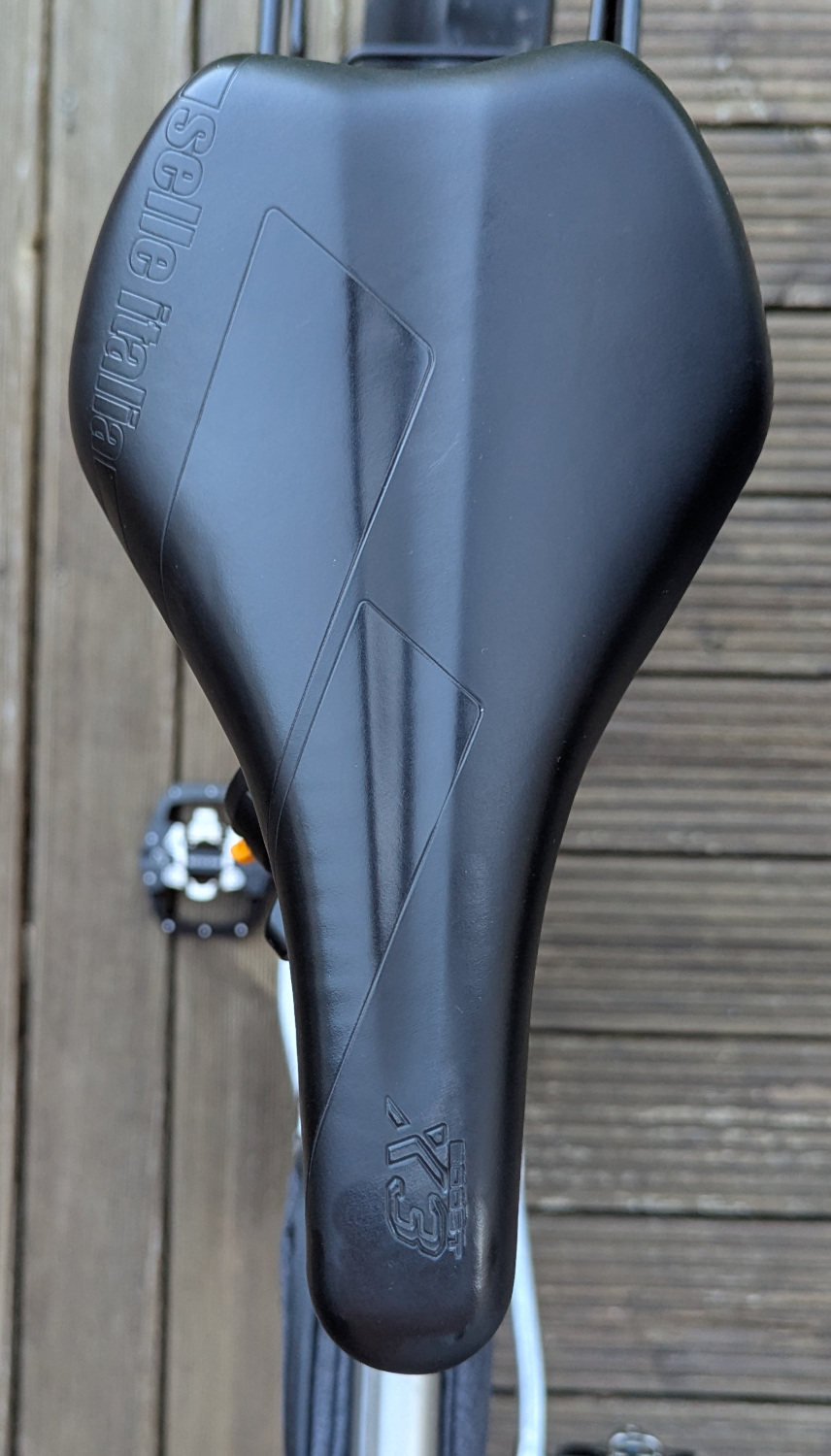
A short-nosed saddle with a flat profile (the “Boost” is Selle Italia’s indicator of a short-nose design). It is 142mm wide. This isn’t a “Flow” version so has no central cut out, but it does have a pressure-relief channel.
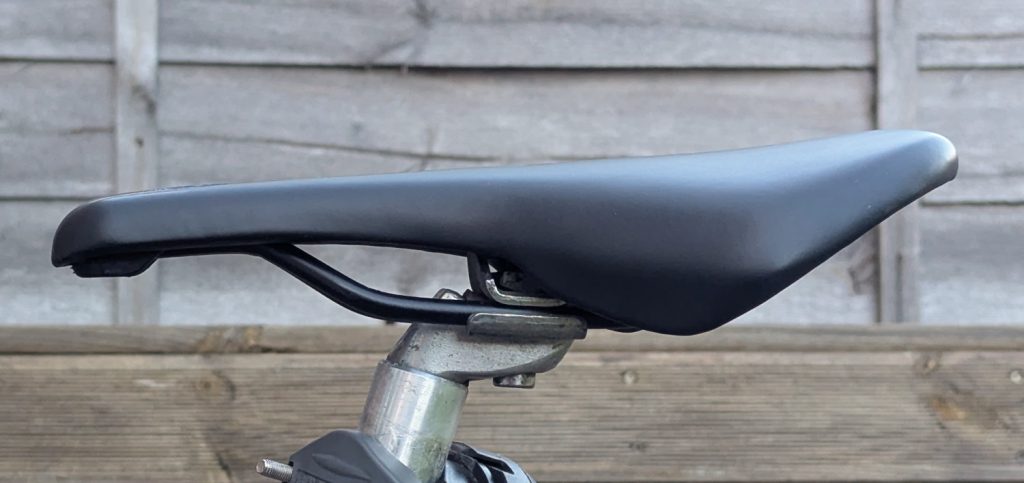
This saddle was fitted to my gravel bike by a previous owner and I’ve given it a decent try (including trying a few tweaks to angle and set-back). I can tolerate it but just don’t find it comfortable enough on longer rides on the Cannondale – the profile is quite flat and I find it feels quite firm in an intrusive rather than supportive way – it doesn’t seem to suit me.
Marin Comfort (from 1996 Marin)
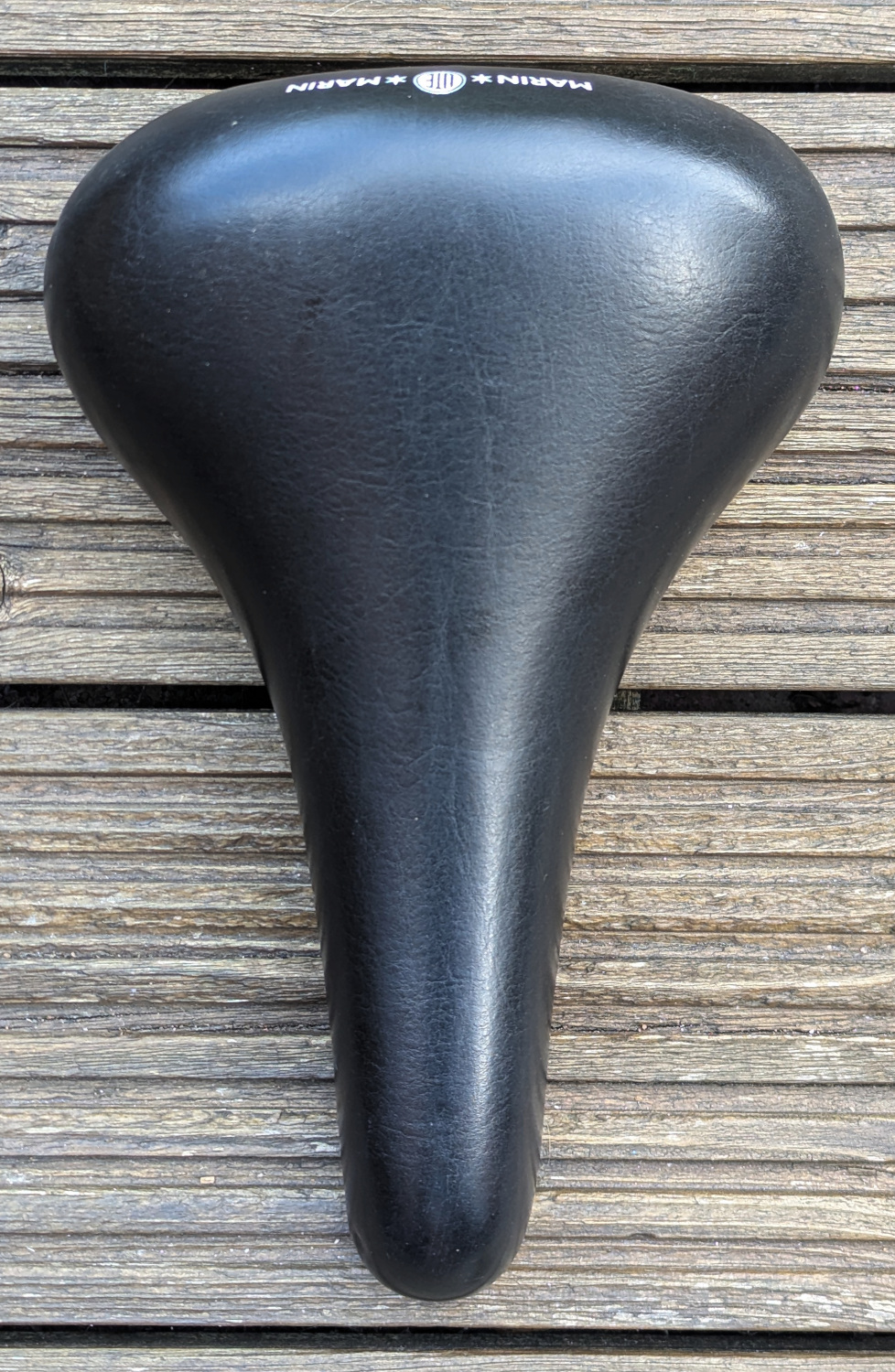
A wide saddle with thick padding (described by Marin as having “soft foam”). Manufactured by Velo.
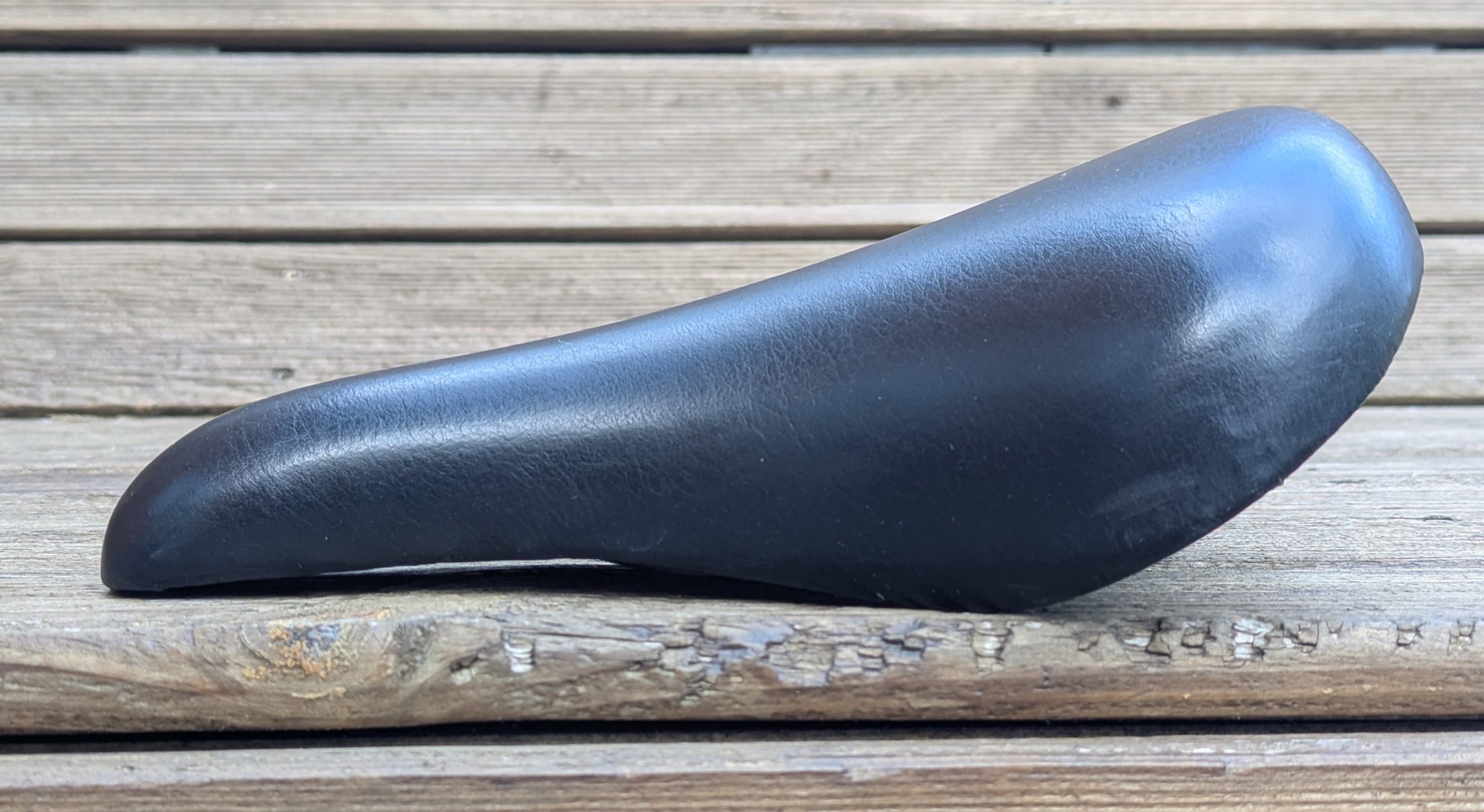
My 1996 Marin Bobcat Trail was supplied with this “Marin Comfort” saddle which seemed to be what they fitted to the bottom 3 of their MTB range and the bottom 3 of their City Bike range (with the Marin Sport on the next one up, and then the Ritchey Vector on the rest). It was fine for shorter rides and trail rides where I’m moving around lots, but on longer road rides it would become uncomfortable – I’m not sure if it was down to the shape, the padding, or both (I gather that excessive padding on a saddle can be problematic once you start to ride longer distances).